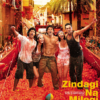
Cinematographers, sound recordists, and scriptwriters have their own approach to the use of European locations. For instance, cinematographers are particularly concerned about scenic views as well as the extended daylight hours that give them a chance to shoot for longer. Similarly, sound recordists are also known to record the sounds of European cities along with local musical forms to create musical tracks where the influence of the location is blended with Indian musical forms. Scriptwriters’ work through situations in which characters get to be placed in European locations.
Some view the basis of any film as the script, for example, for Queen (2013), the script was based in Europe as it is about a young woman in Delhi who travels overseas after being rejected by her fiancé. Paris was written into the script and was part of the original selection. Amsterdam was considered an open city –like any European city. A team, however, first scouted Prague with the local line producers to test the city’s visual vibe. The budgets were then taken from both Prague and Amsterdam – these budgets were compared, and then the decision was taken to go with Amsterdam. Chaitali Parmar, the writer of Queen, explained why a combination of Paris and Amsterdam was essential for the film and why they went with non-iconic locations in Amsterdam while sticking with the iconic Eiffel Tower for the sections shot in Paris.
Roshni Dinaker, director of the Malayalam film, My Story (2018) shot in Portugal, said the decision to shoot in Portugal was based on her story’s needs for a fairy-tale setting. Lisbon gave her a combination of readily available beaches and castles. Satish Chinnan (Mani Rathnam’s producer) in Chennai said Mani Rathnam’s film Chekka Chivantha Vaanam (Crimson Red Sky, 2018) was shot in Georgia and Serbia with the help of Clockwork film productions. Apart from a detailed account of budgeting, shooting and processes involved in foreign location, shooting the film in Georgia helped to get access to the military base and hangar, both of which were off-limits in India. Another interesting detail that he alerted us to was that Georgia now stands in for Kashmir in many Indian films.
Shaad Ali, the director of Jhoom Barabar Jhoom (2007), recalled how the film started off as a very small production set in a railway station in Delhi. The original title was Sangam Mail as the protagonists in the film were supposed to be waiting for the arrival of a train called Sangam Mail, moving between Allahabad and Delhi. This was the first version he wrote. Ali felt he wanted to move away from the small-town setting of his hugely successful Bunty aur Babli (2005). He wanted to take the story to some other place, like London, so getting out of India was the first step. But once the script moved to the U.K., it became possible to include a Pakistani character as well. The space provided the context for a change in the script. Since the story depended on a series of lies cooked up by the two characters, events from the world entered like the Lady Diana story—about her last night at the Ritz hotel. So, while the essence of the story was still something small that could have happened to two people anywhere in the world, the change in scale helped expand the terrain of the script. The Lady Diana story took them to Paris, while the Waterloo train station in London became the site that replaced the original vision of a railway station in Delhi.
In Bengali cinema, foreign locations have been used mainly for one-off song sequences. In Dui Prithibi (2010), a small portion was shot in Italy, and it was probably the first film of significance shot in Europe. One of the major productions shot entirely abroad, in Italy, was Parambrata Chatterjee’s sci-fi thriller Bony (released in 2021). The entire shooting in Italy was managed by Odu Films, which has become a manager for European shoots for Southern films as well. They organize all the major aspects of any shoot: equipment, extras, permissions, boarding and lodging, internal travel, location visits, etc. However, they cater to low- to middle-budget films. It is interesting to note that most Bengali films with a considerable amount of shooting abroad belong to the ‘off-beat’ middlebrow arthouse range of cinema. Significant examples are Aniruddha Roy Chowdhury’s Anuranan (2006, shot partly in the UK), and Churni Ganguly’s Nirbashito (2014, SVF Films). Popular Bangla cinema mostly shoots songs in Europe, and the preferred locales are Italy, Switzerland, and some parts of the UK. Shri Venkatesh Films (SVF) claims to have shot 20 times in Switzerland.